
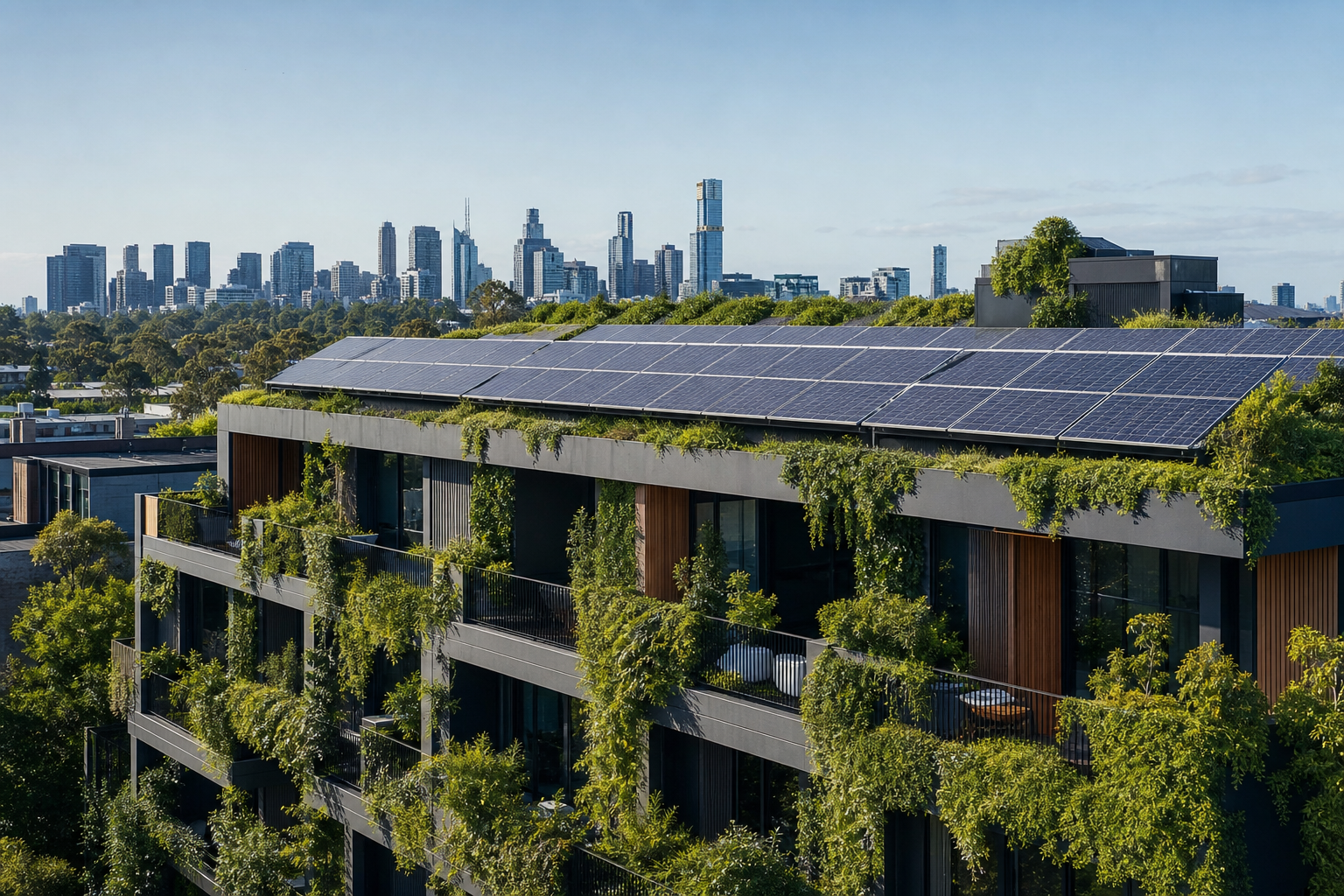
Environmental, social, and governance expectations increasingly influence investor mandates, tenant selection, and council assessment. We integrate practical ESG measures that meet Victorian code and council requirements.
Environmental performance
NCC energy provisions drive insulation, glazing, and services efficiency in new Melbourne buildings. Early energy modelling informs orientation, envelope specification, and HVAC selection. All-electric buildings with solar PV and battery readiness align with Victorian electrification direction and reduce long-term operating cost.
Embodied carbon disclosure is emerging in planning assessment on significant projects. Material selection — timber structure where appropriate, lower-carbon concrete mixes, durable façade systems — affects lifecycle impact and maintenance frequency.
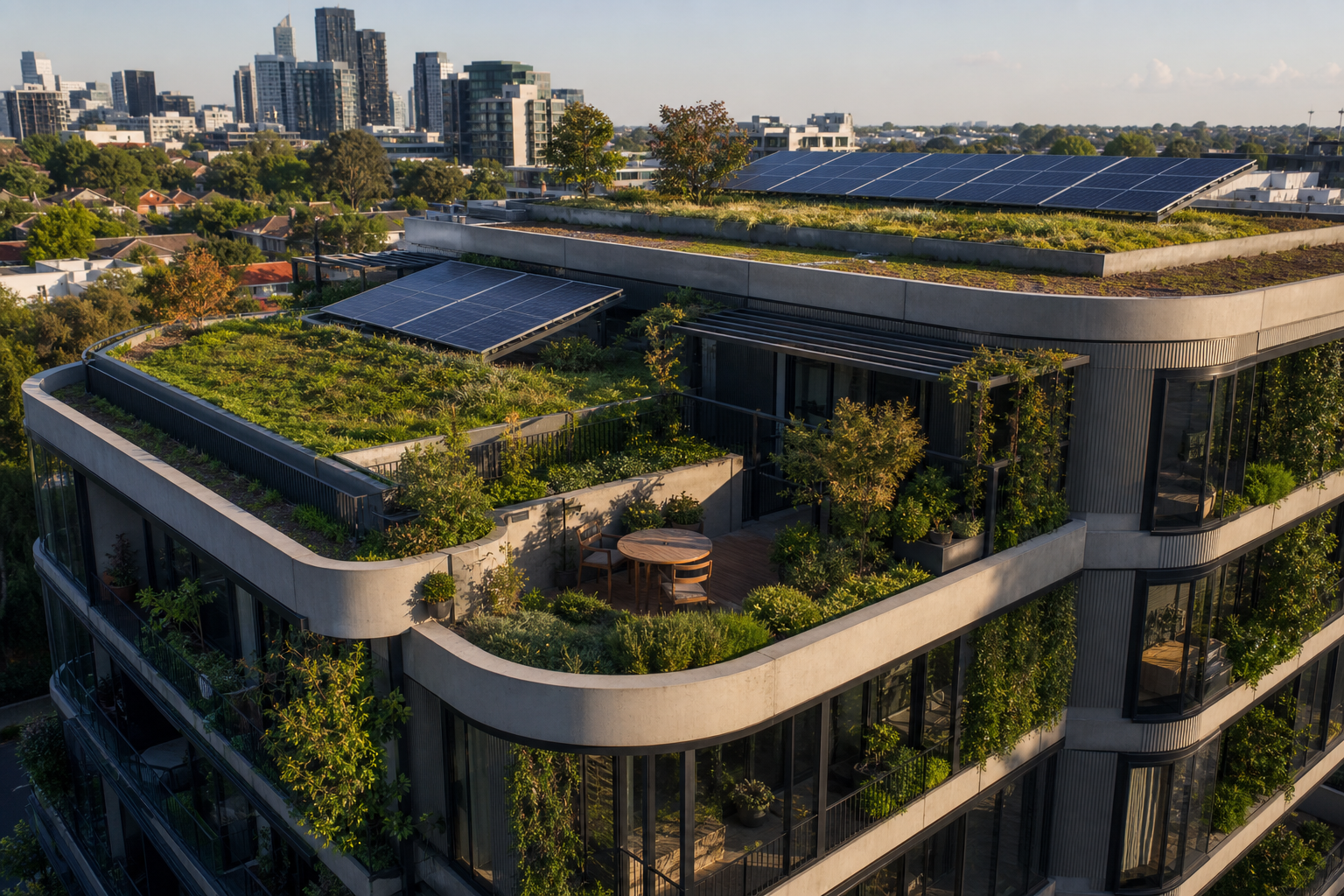
Water sensitive urban design, rainwater harvesting, and landscaping with indigenous species reduce irrigation demand and support biodiversity in dense urban settings.
Social outcomes
Construction disruption management — noise, dust, hours — respects adjacent residents and maintains community relations critical to planning on future sites. Accessible design and inclusive common areas improve occupant experience across age and ability.
Quality construction reduces defects and displacement — a social cost often ignored when speed and margin dominate.
Governance
Transparent reporting to investors on cost, programme, and risk supports governance expectations. Documented consultant procurement, contractor WHSE performance, and security of payment compliance demonstrate accountable management.
Owners corporation establishment with adequate sinking fund planning and maintenance guidance protects long-term asset value for residents.
ESG that matters shows up in energy bills, defect rates, and neighbour relations.
Application
Project Avoca integrates practical ESG measures into feasibility and specification decisions. Discuss sustainability objectives on your Melbourne development enquiry.
Reporting to investors
Investors with ESG mandates request disclosure on energy performance, waste diversion during construction, and WHSE metrics. Collecting data during delivery satisfies mandate without retrospective reconstruction of records.
Climate adaptation
Increased storm intensity affects drainage design and basement waterproofing on Melbourne infill sites. Heat island effect in dense precincts influences HVAC sizing and landscape shade provision — adaptation measures have upfront cost and long-term benefit.
Operational energy
Tenant and owner operating cost is affected by envelope performance and services selection at development stage. Higher upfront specification of glazing and HVAC efficiency reduces NABERS and residential energy cost over hold period — relevant to build-to-rent investor underwriting.
Construction waste diversion targets are increasingly specified in council permit conditions — waste management plans with diversion reporting are standard on Project Avoca sites.
Electric vehicle charging provision in townhouse garages and apartment basements is increasingly expected by purchasers — capacity provision at development stage avoids costly retrofit.
ESG integration begins at feasibility — not as marketing overlay at sales launch.
Measurable outcomes
ESG integration we apply includes all-electric dwellings with solar PV where orientation permits, construction waste diversion reporting per council condition, WHSE metrics in monthly client report, and operating cost modelling for build-to-rent investors. Certification is pursued only where tenant mandate or planning benefit justifies cost.
Embodied carbon reduction through material selection — lower-carbon concrete where available, durable façade systems reducing replacement frequency — is evaluated at specification stage with cost premium stated transparently.
Project Avoca view
On boutique projects, energy performance, durable materials, and low defect rates deliver measurable ESG outcomes for occupants and long-term holders.
Practical checklist
At feasibility on boutique projects: model operating energy cost for build-to-rent; specify waste diversion in construction contract; document WHSE metrics for investor reporting; evaluate embodied carbon premium against hold period; provision EV charging capacity where purchaser expectation emerging.