
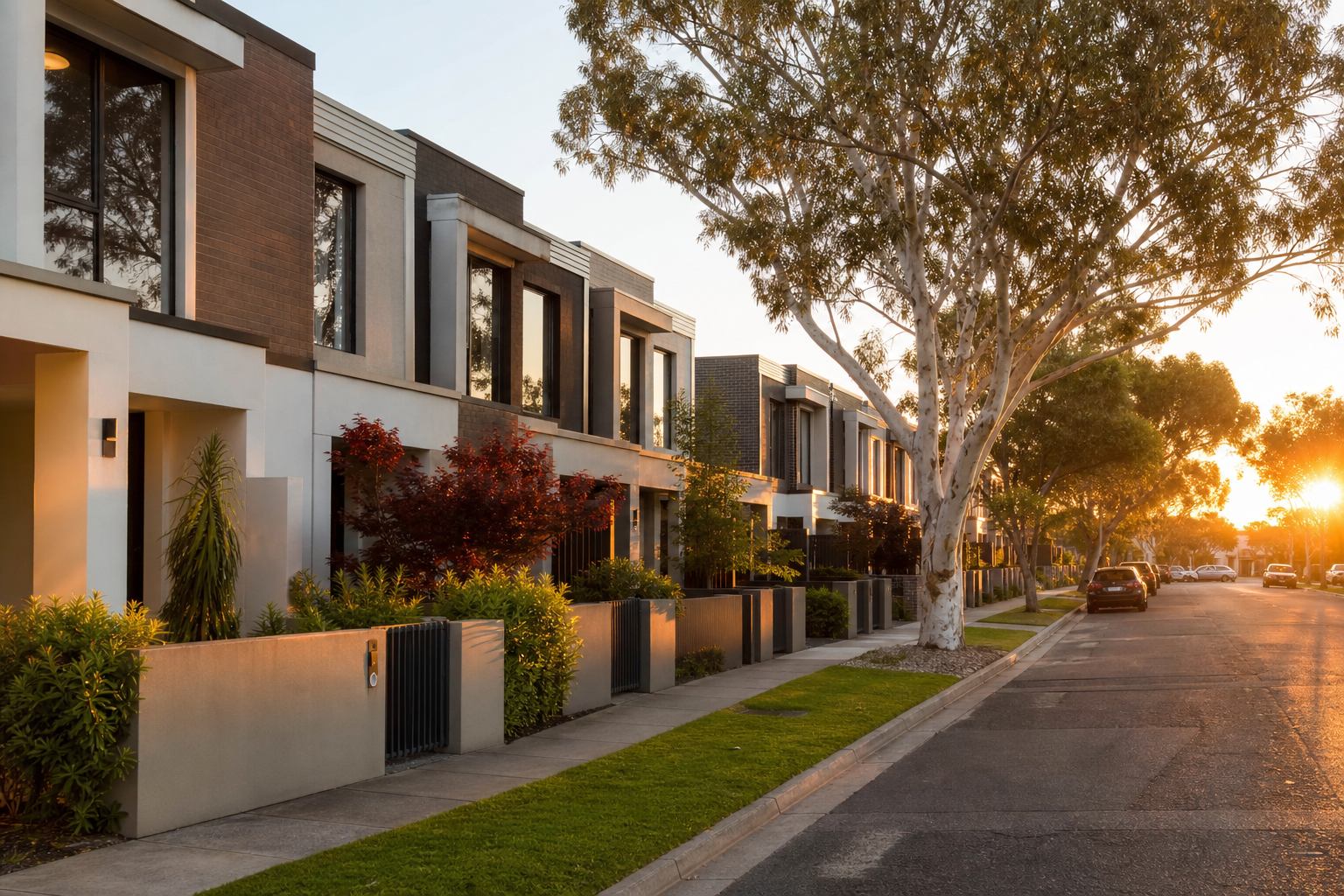
Townhouse projects succeed when design responds to street rhythm, garden area requirements, and overlooking controls — not when imported product ignores Melbourne municipal context.
Clause 55 and garden area
Residential development provisions including clause 55 garden area requirements apply across General Residential Zones in Melbourne. Design must demonstrate adequate private open space, landscaping depth, and visual permeability along street frontages. Waiver pathways exist but require justification that alternative amenity compensates.
Corner lots offer opportunities for secondary street presentation and improved cross-ventilation. Rear laneway access common in inner suburbs influences garage placement — domination of front façade by vehicle doors is a frequent council objection.
Neighbourhood character
Municipal neighbourhood character policies in Boroondara, Stonnington, and Monash emphasise roof form, material palette, and front fence heights compatible with contributory buildings. Heritage overlays add façade control and sometimes require heritage adviser input.
Overlooking and overshadowing affect upper level window placement and balcony design. Articulation, screening, and setback variations negotiated at planning stage prevent permit conditions that compromise architecture at building permit.
Council officers respond to projects that read as continuation of the street — not interruption of it.
Internal liveability
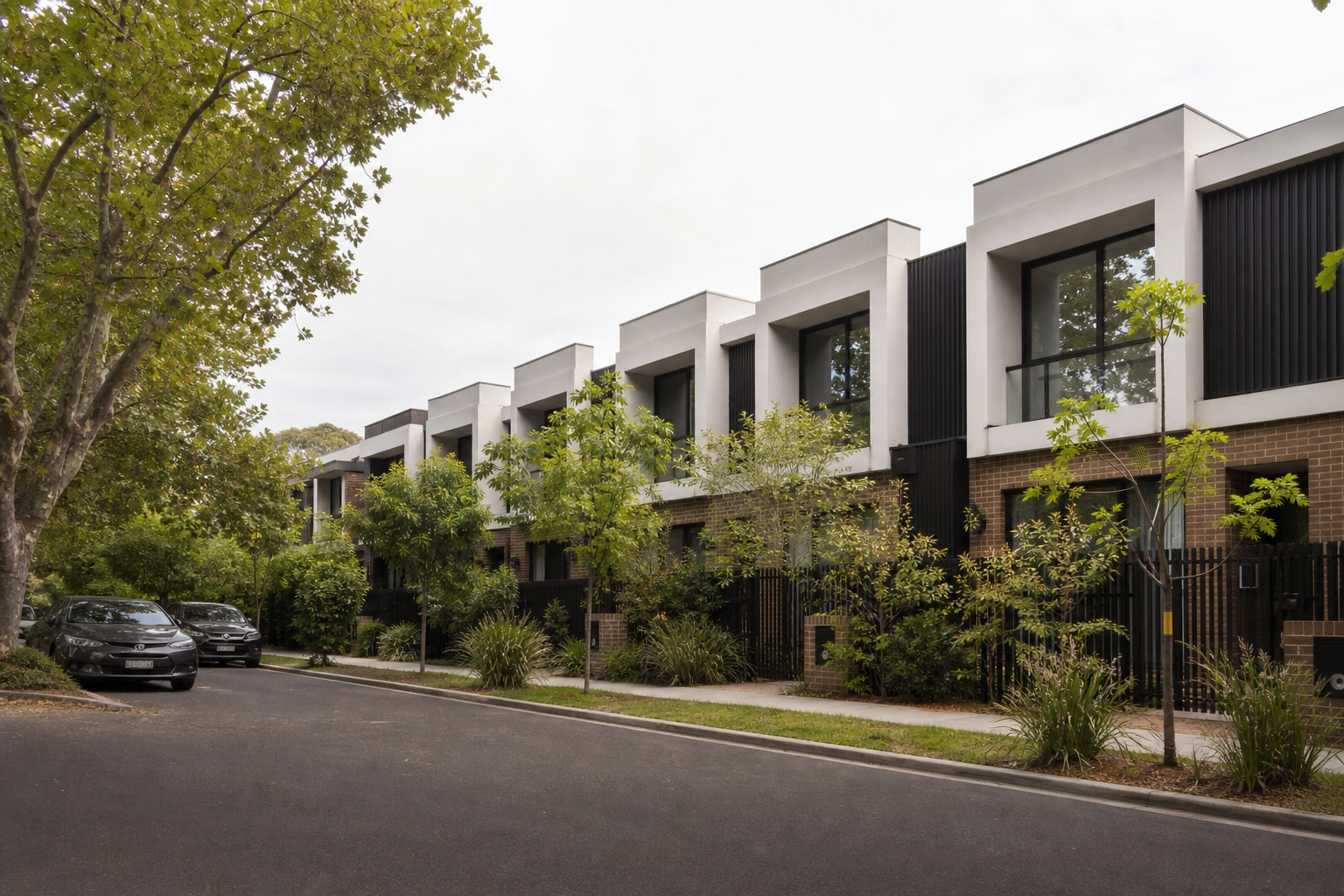
Three-bedroom configurations with ground-floor living opening to private open space suit family owner-occupiers in Northcote, Brunswick, and Camberwell markets. Storage, natural light, and acoustic separation between party walls differentiate premium product from commodity townhouses.
Subdivision design aligns easements, shared driveways, and owners corporation rules with legal documentation before construction.
Project Avoca experience
Our townhouse pipeline — including Richmond Terrace and similar infill — applies these principles in active projects. Contact us to discuss medium-density potential on your Melbourne land.
Vehicle access
Shared driveways require turning circle compliance and sight line clearance. Garbage truck access for multiple dwellings influences laneway width and gate specification. Early traffic engineering input prevents redesign at building permit.
Acoustic design
Party wall STC ratings and floor impact isolation require construction detailing verified at inspection hold points. Purchasers in medium-density product are sensitive to neighbour noise — acoustic failure generates defects and reputational harm.
Landscape depth
Minimum garden area is not merely numeric compliance — soil depth for planting, irrigation, and mature tree retention distinguish credible landscape from token turf. Council landscape officers respond to planting schedules showing species, pot size at installation, and maintenance period.
Rear laneway garbage collection for multiple dwellings requires truck turning and bin storage dimensioned at planning stage — retrofit is disruptive and expensive if overlooked.
Front fence height and articulation contribute to street rhythm — uniform solid fencing is frequently resisted by council landscape officers in character-sensitive streets.
Townhouse design excellence supports both planning success and purchaser satisfaction in Melbourne medium-density markets.
Council negotiation
Successful townhouse applications in Yarra and Merri-bek often exceed minimum garden area and present pitched roof forms referencing contributory buildings — investment in planning negotiation rather than maximum yield envelope. Officer support reduces condition burden at permit issue.
Laneway garbage access for multiple dwellings must dimension truck turning at planning stage. Retrofit after construction disrupts driveway pavement and landscape — expensive and visible to council compliance.
Project Avoca view
Our Richmond Terrace pipeline applies these principles on active family product. Purchasers sensitive to neighbour noise require party wall and floor impact isolation verified at hold points — not assumed from drawing note alone.
Practical checklist
Before planning lodgement on medium-density family product: verify laneway truck access; exceed minimum garden area where negotiation value exists; commission acoustic design for party walls; prepare landscape schedule with species and pot size; align roof form with neighbourhood character policy in target municipality.