
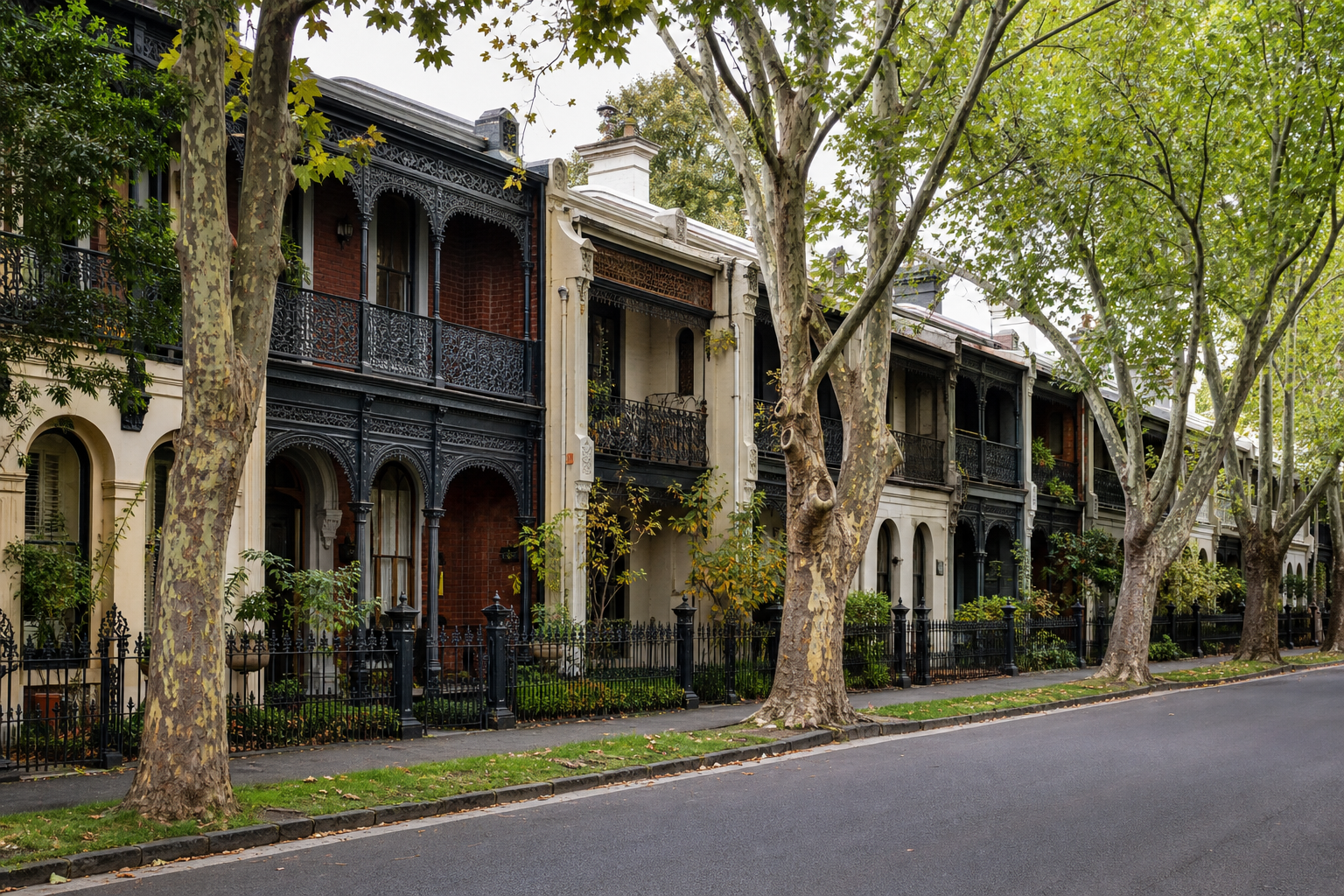
Six townhouses along a heritage-contributory street in Richmond — balancing clause 55 garden area, laneway access, and family-oriented liveability.
Project overview
Richmond Terrace redevelops a consolidated double block with rear laneway vehicle access. Six three-bedroom townhouses with double garages address family demand in the Yarra municipality while respecting neighbourhood character policy.
Challenges
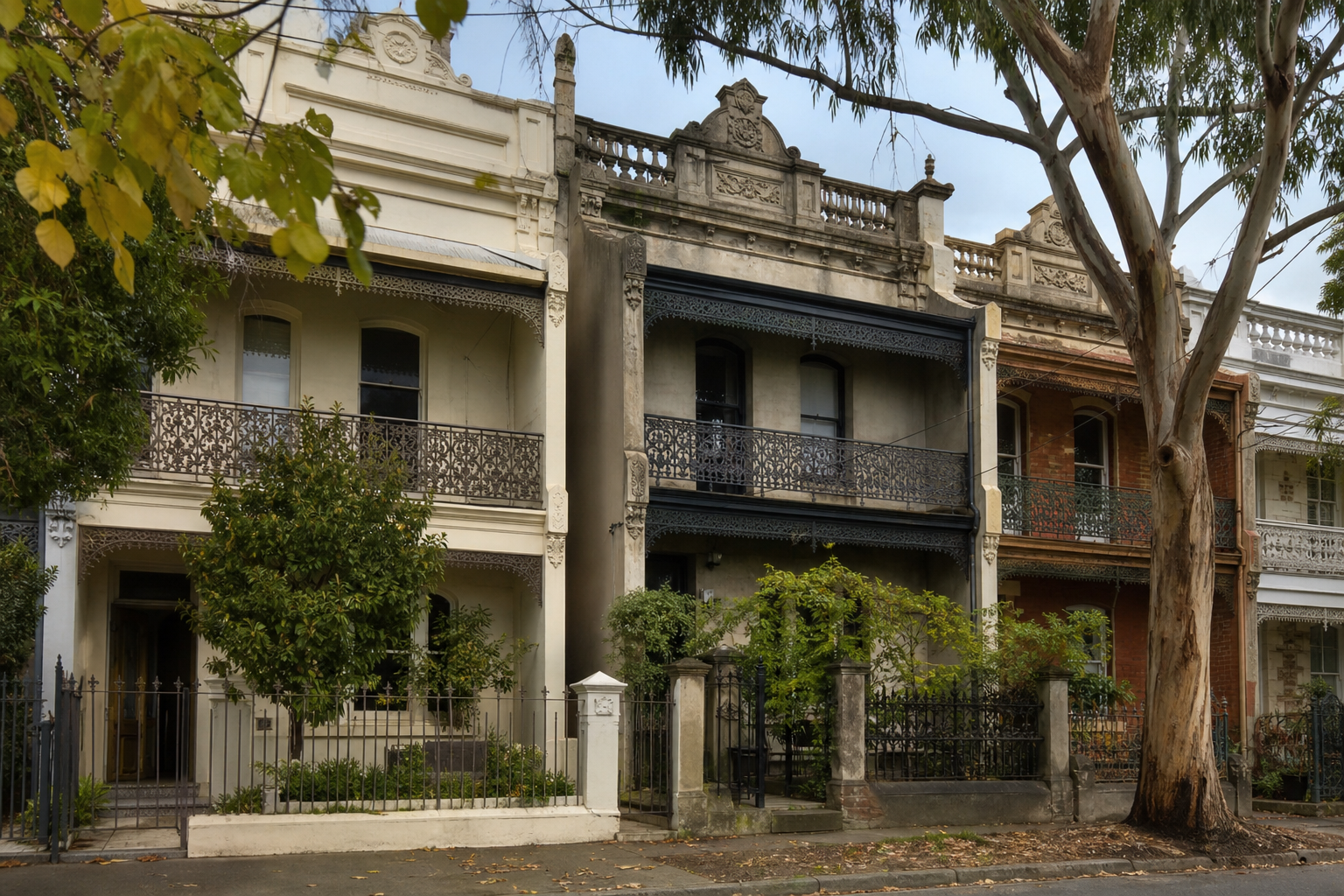
Heritage overlay on adjacent properties constrained street-facing height and material selection. Council officers required detailed neighbourhood character analysis demonstrating compatibility with Edwardian terrace rhythm.
Laneway access for six dwellings required upgrade to meet emergency vehicle standards — unanticipated cost discovered during referral to Metropolitan Fire and Emergency Services Board.
Overlooking controls limited upper level windows facing north-west neighbours, affecting master bedroom daylight until design iteration introduced clerestory and internal light courts.
Solutions
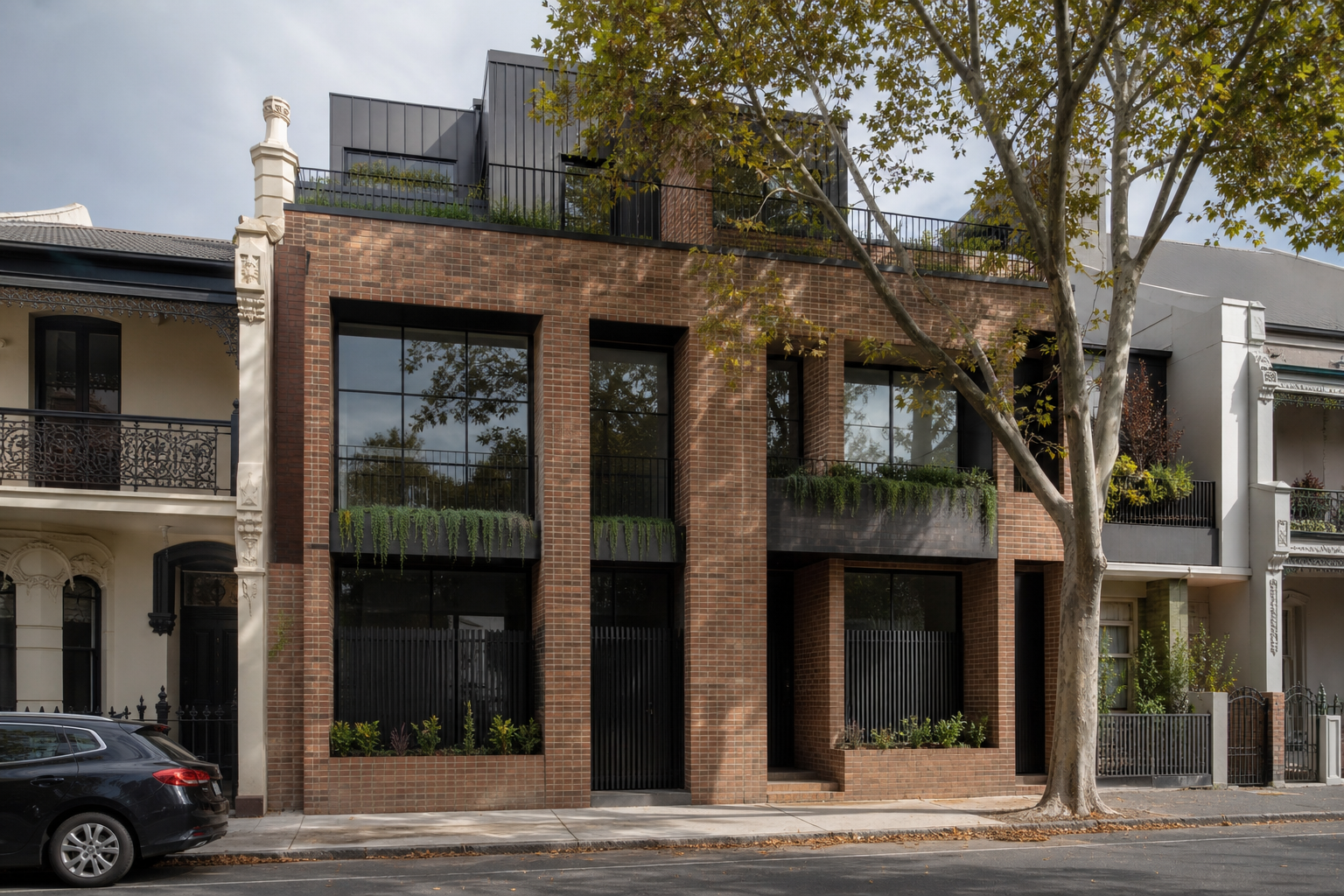
Architectural response adopted pitched roof forms and brick-plus-render palette referencing contributory buildings without pastiche. Front landscaping exceeded minimum garden area to support planning negotiation.
Laneway upgrade was packaged with Melbourne Water drainage improvements in single construction contract to reduce mobilisation cost and programme fragmentation.
Pre-sales to owner-occupier families prioritised end units with larger private open space — informing finishing specification and landscape budget allocation.
Outcomes
Planning permit secured with conditions manageable within feasibility contingency. Building permit documentation advanced in parallel to compress overall programme.
Project establishes template for medium-density family product in Yarra municipality applicable to similar consolidated lots.
Construction methodology sequences party wall works to minimise vibration impact on adjacent heritage properties. Monitoring points were established per engineer specification during footing excavation.
Landscape establishment includes two-year maintenance period in contract to protect street presentation during early occupation.
Brick selection matched heritage palette while meeting current mortar and tie requirements. Sample panel approved by heritage adviser before full elevation construction.
Stormwater detention integrated below driveway satisfied Melbourne Water requirements without sacrificing saleable basement area on dwelling units.
Technical detail
Party wall construction sequenced to limit vibration impact on adjacent heritage properties — monitoring points established per engineer specification during footing excavation. Shared laneway upgrade included drainage augmentation satisfying Melbourne Water referral conditions without separate mobilisation contract.
Brick selection matched heritage palette while meeting current mortar and tie standards. Sample panel approved by heritage adviser before full elevation construction prevented mid-build material rejection.
Lessons for similar sites
Consolidated double blocks with laneway access suit family townhouse product in Yarra municipality when garden area and character analysis precede fixed architectural form. Pre-sales to end users informed finish specification on corner units with enhanced private open space.
Stakeholder outcomes
Owner-occupier pre-sales on end units with enhanced private open space completed before construction peak — supporting financier presale covenant. Neighbour relations maintained through documented construction hours and vibration monitoring during party wall phase — no adjudication proceedings during build.
Landscape maintenance period in contract protected street presentation through first two years of occupation. Building permit documentation advanced parallel to planning approval — compressing overall programme versus sequential pathway.