
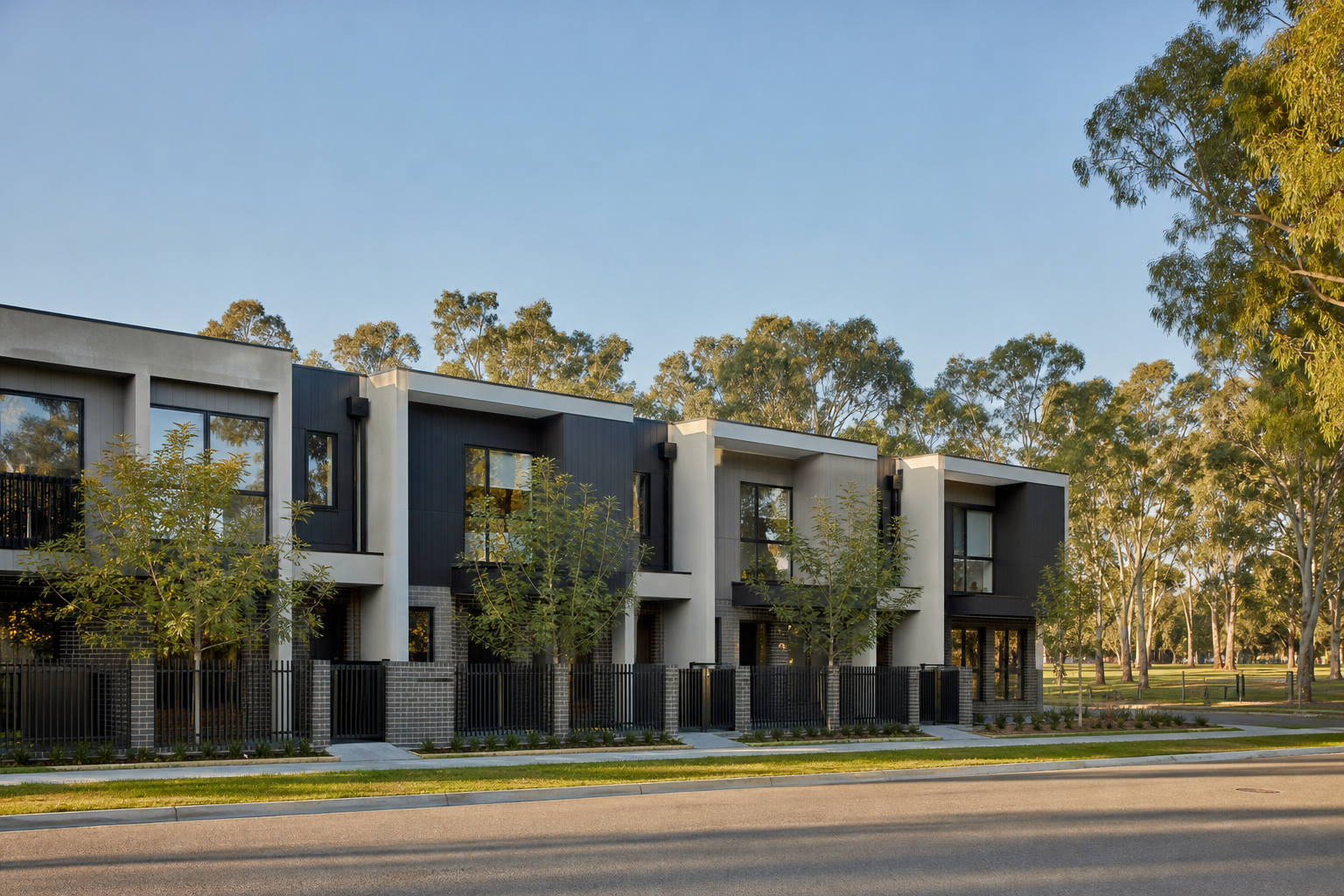
Eight townhouses near Yarra Bend parkland — family-oriented planning, ESD measures, and parkland interface sensitivity.
Project overview
Yarra Bend develops eight three-bedroom townhouses on a sloping site adjoining parkland in Alphington. Dwelling design prioritises northern light, cross-ventilation, and acoustic separation from recreational traffic.
Challenges
Slope across site required cut-and-fill balancing and retaining structures affecting cost and landscape integration.
Council emphasised interface with parkland — overlooking and privacy for park users as well as future residents.
Darebin planning pathway included community notification with objections requiring written response and design adjustment.
Solutions
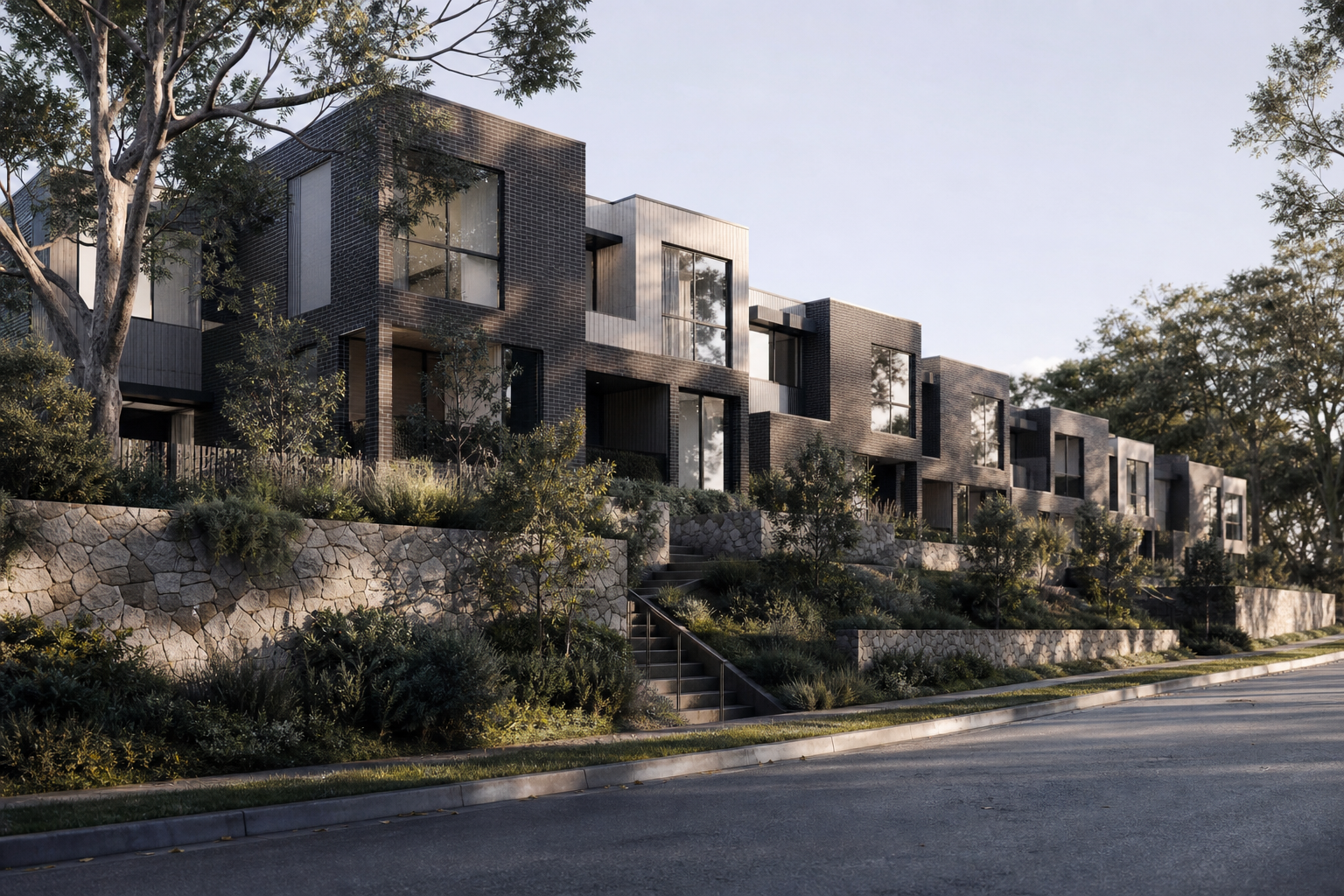
Stepped building form followed natural grade reducing visual bulk toward parkland. Native landscaping buffer reinforced ecological corridor continuity.
Acoustic fencing and glazing specification tested against park event noise scenarios during planning assessment.
All-electric dwellings with solar PV and heat pump hot water align with Project Avoca ESG approach and reduce operating cost for owner-occupiers.
Outcomes
Planning permit issued after objection resolution without VCAT appeal. Construction under way with three dwellings presold to families seeking parkland proximity.
Project on track for staged practical completion allowing early settlement while later stages continue.
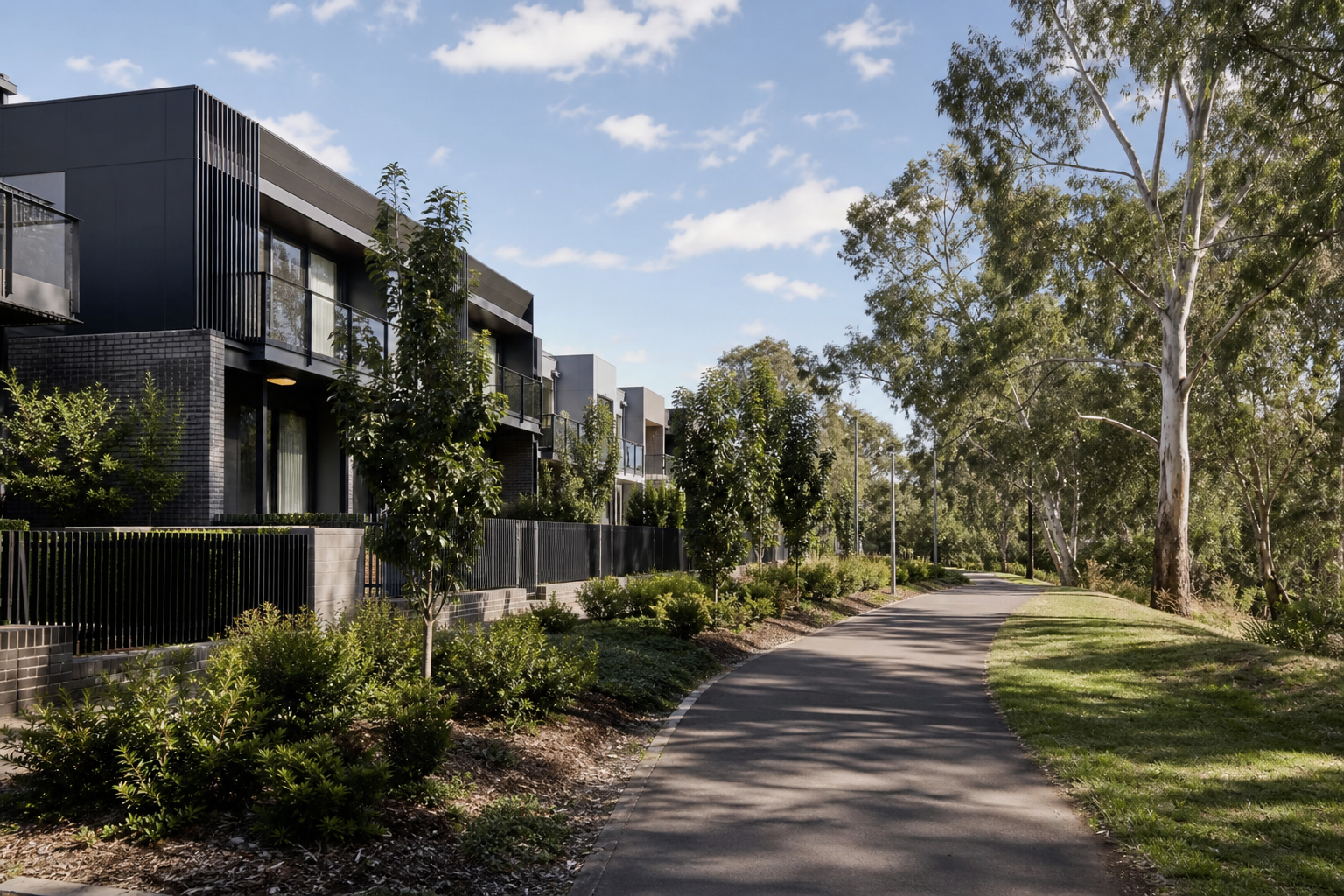
Parkland interface landscaping uses species selected with council arborist to complement existing canopy. Path connections to Yarra Bend trails referenced in marketing to family purchasers.
Retaining walls faced with natural stone blended with parkland edge. Drainage behind retaining verified before backfill to prevent long-term movement affecting driveway pavement.
Acoustic report modelled weekend park event noise — glazing specification upgraded on park-facing bedrooms. Outcome satisfied planning condition without post-occupancy complaint risk.
Staged OC application allows early settlements on completed dwellings while later stages continue — cash flow to development entity aligned with purchaser settlement schedule.
Dwelling energy ratings exceeded minimum NCC requirements — purchasers receive lower forecast operating cost supporting sales conversation in rising energy price environment.
Native landscaping established successfully through first summer — council arborist inspection confirmed compliance with permit conditions.
Technical detail
Stepped form followed natural grade reducing visual bulk toward parkland interface. Retaining walls faced with natural stone blended with park edge; drainage behind retaining verified before backfill to prevent long-term pavement movement.
Staged OC application allows early settlement on completed dwellings while later stages continue — cash flow aligned with purchaser schedule. Native landscaping established through first summer satisfied council arborist inspection.
Lessons for similar sites
Park-adjacent sites require acoustic modelling for weekend event noise — glazing upgrade on park-facing bedrooms satisfied planning condition without post-occupancy complaint risk. All-electric dwellings with solar PV exceeded minimum NCC — supporting sales conversation in rising energy cost environment.
Stakeholder outcomes
Objection resolution at planning stage avoided VCAT appeal cost and programme delay. Three presold dwellings to family purchasers validated product positioning near parkland. Dwelling energy ratings above NCC minimum supported sales narrative on operating cost in rising energy price environment.
Staged settlement allowed early purchaser occupation while later stages continued — cash flow to development entity aligned with construction drawdown without financier covenant breach.
Drainage on slope
Cut-and-fill on the Alphington site required on-site detention sized for Darebin drainage standards. Retaining walls doubled as detention edges — a detail resolved in civil design before excavation, not after neighbours reported runoff during first winter.