Townhouse development bridges detached housing and apartment living. Project Avoca delivers terrace and townhouse projects that respect Melbourne neighbourhood character while achieving viable density.
Planning context
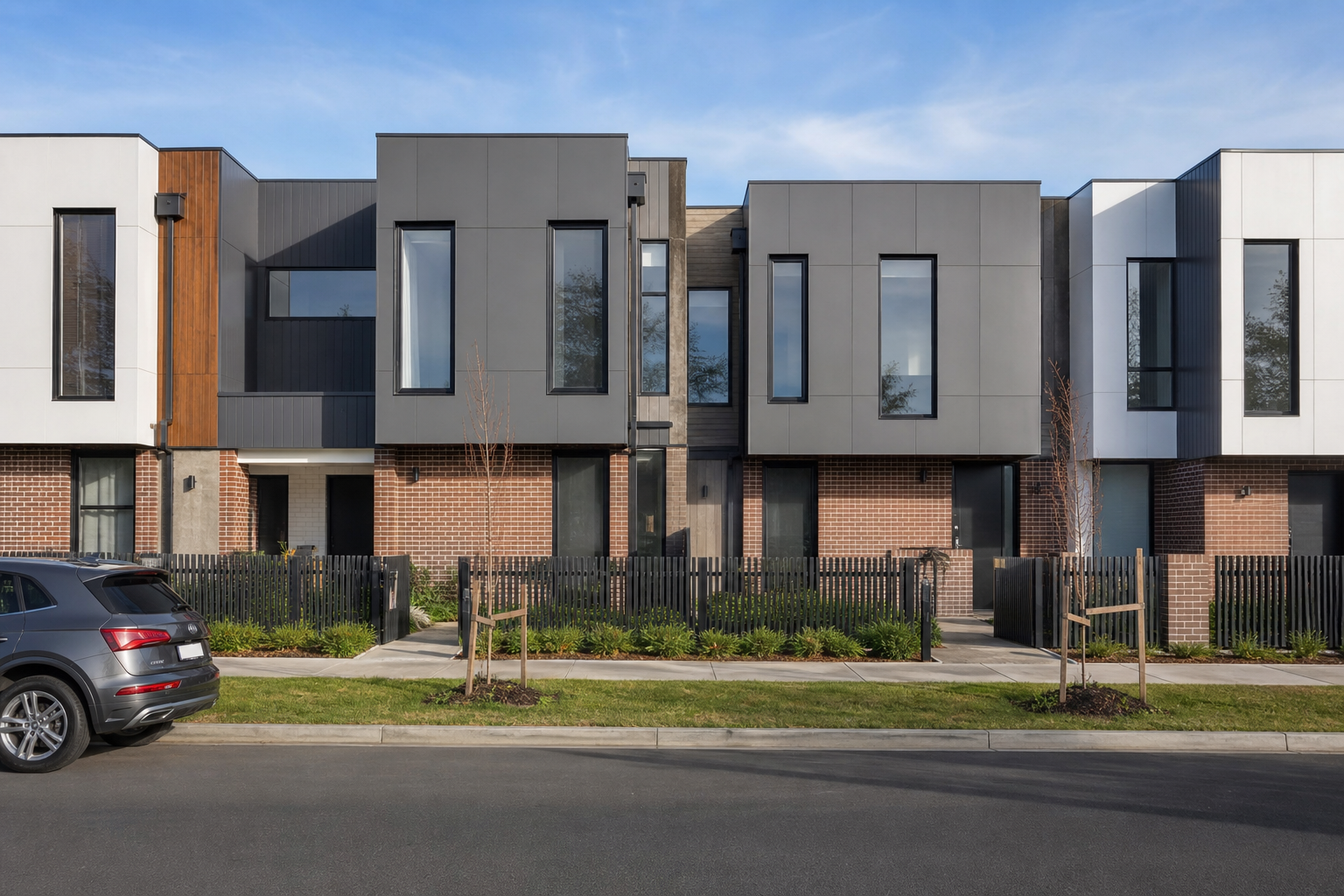
General Residential Zones across Melbourne municipalities apply neighbourhood character policies, garden area requirements under clause 55, and overlooking controls. Townhouse design must demonstrate respect for existing streetscape rhythm, roof form, and landscaping patterns while meeting internal amenity standards.
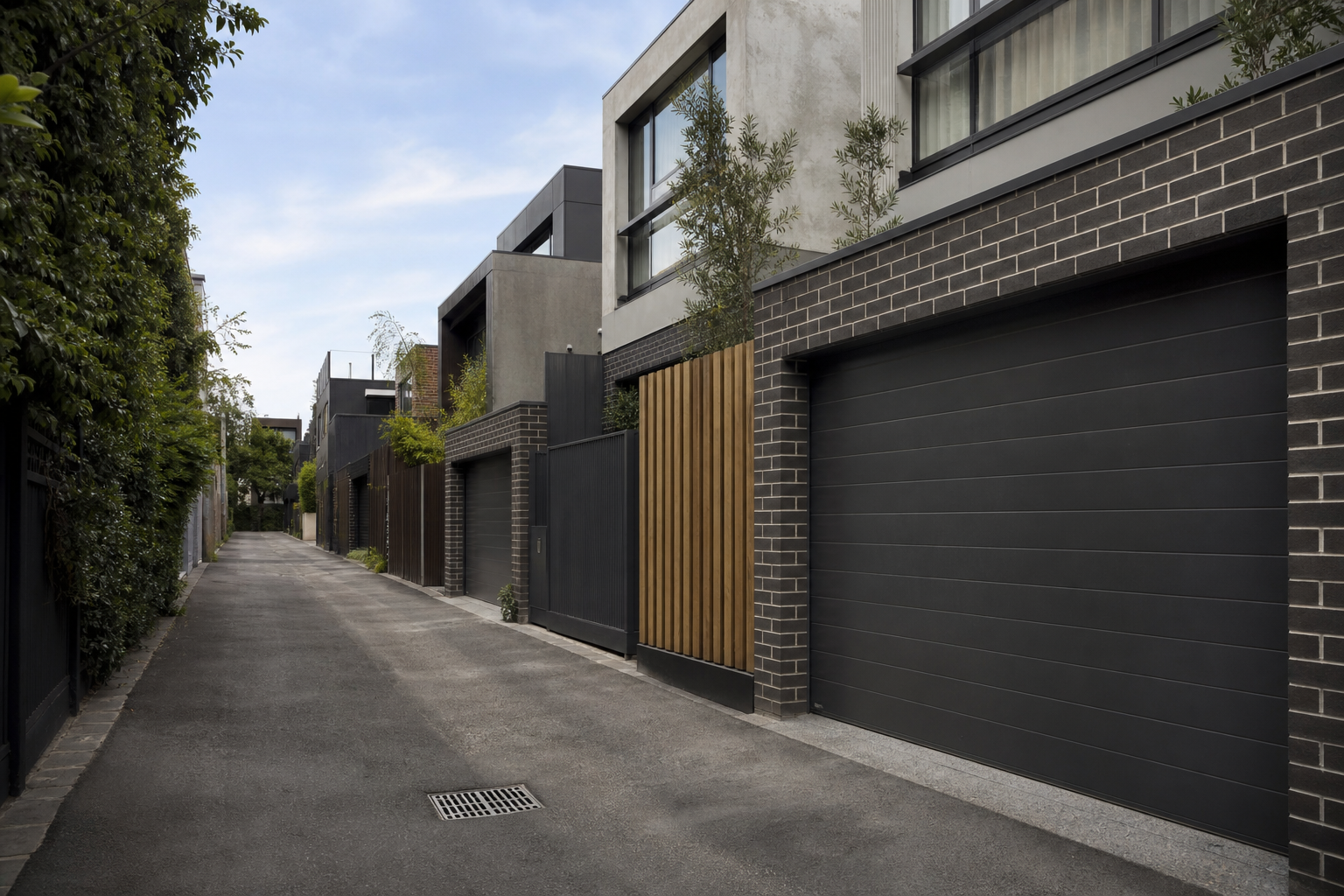
Corner lots and dual-frontage sites offer opportunities for secondary street activation and improved cross-ventilation. Rear laneway access — common in Richmond and Collingwood — influences garage placement and noise management.
Heritage overlays on individual lots or precincts require careful facade treatment and materials palettes compatible with contributory buildings.
Design priorities
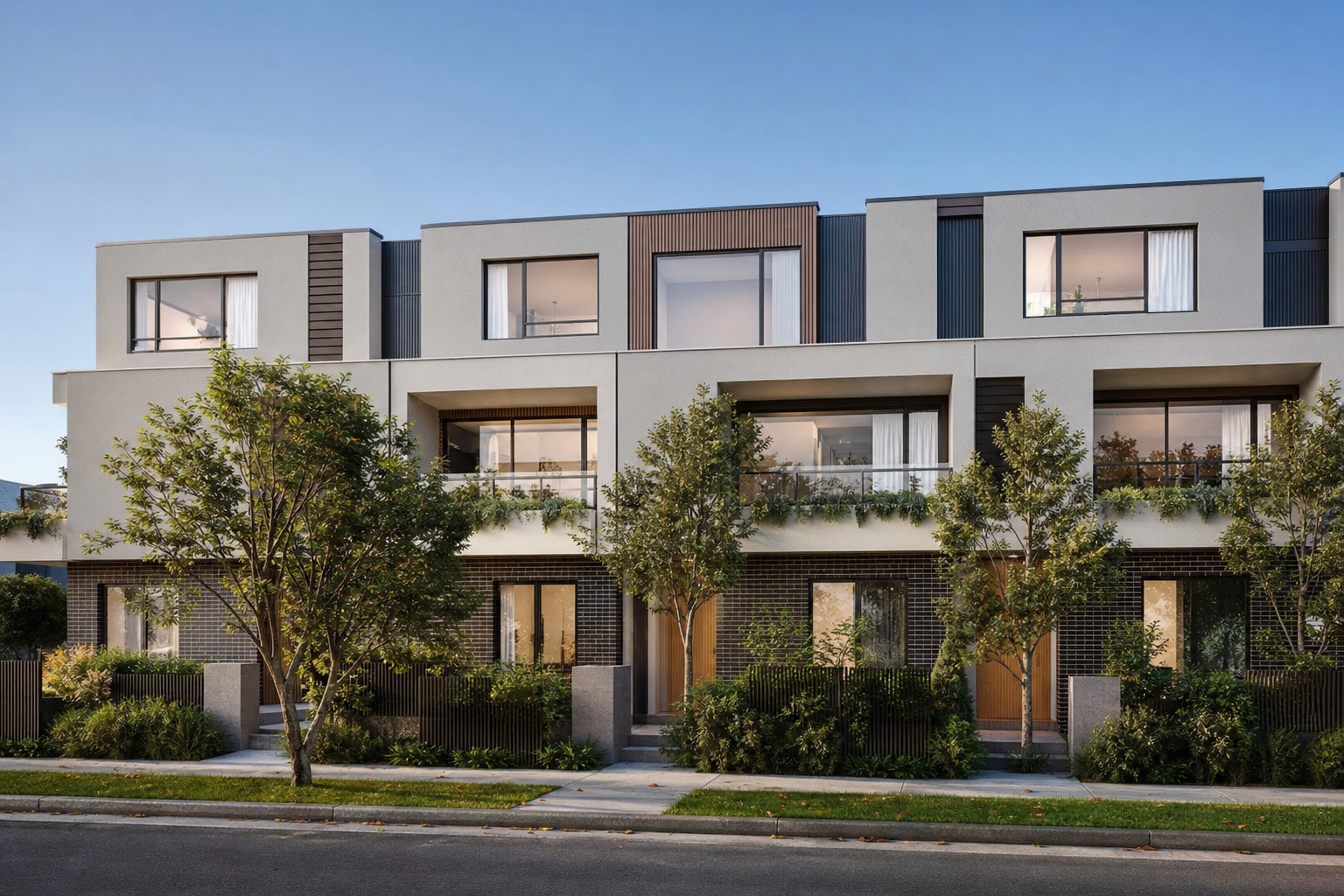
Townhouses succeed when ground-floor living connects to private open space, upper levels receive adequate daylight, and garaging does not dominate street presentation. We pursue three-bedroom plus configurations suited to family owner-occupiers in suburbs like Northcote, Brunswick, and Camberwell.
Party wall construction demands acoustic and fire separation verified at detailing. Shared driveways and easements require legal documentation aligned with subdivision design.
A townhouse street should read as a continuation of the neighbourhood — not an imported product from another council area.
Construction and sales
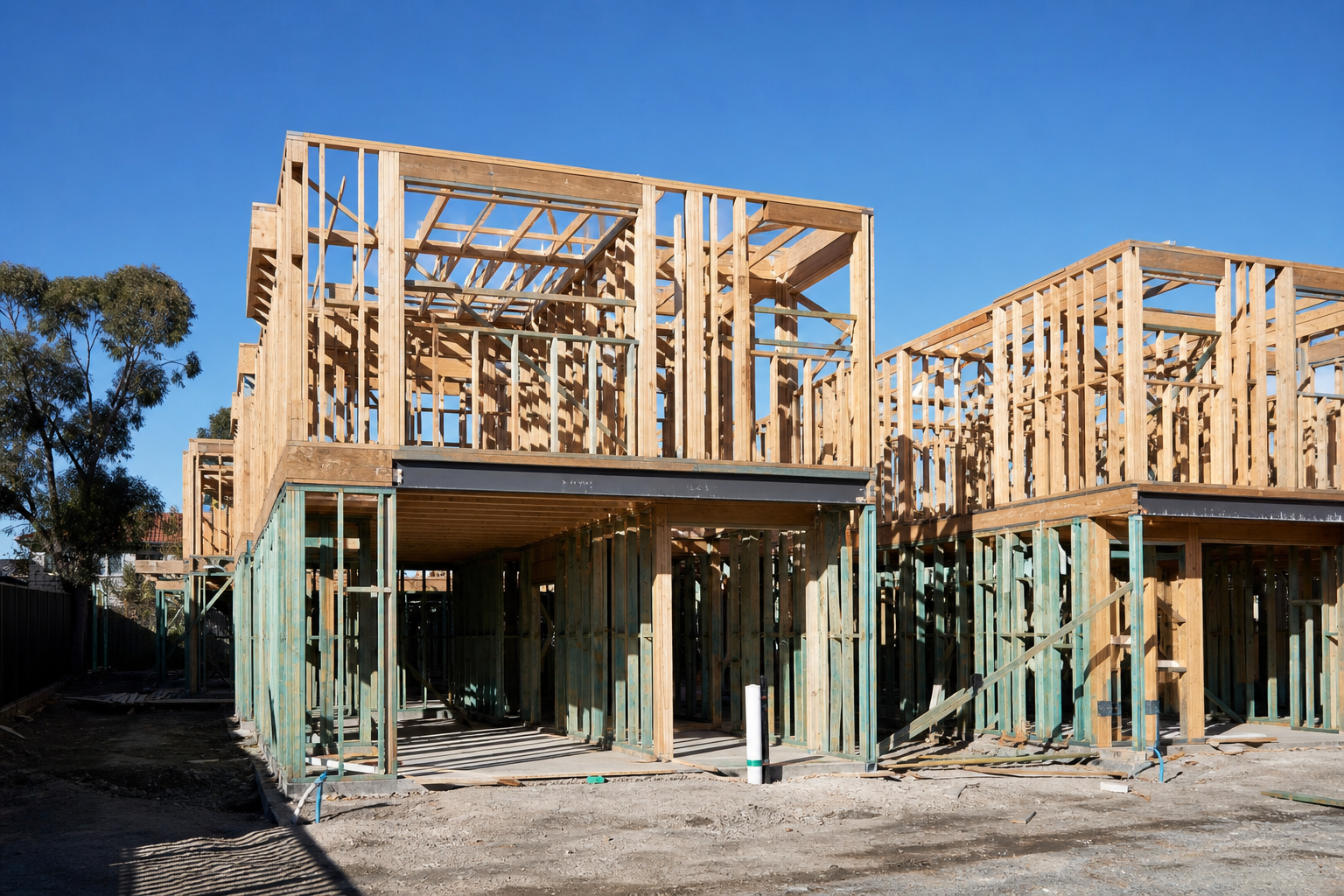
Townhouse construction often proceeds in stages on multi-lot sites. Programme sequencing minimises cross-trade conflict and protects completed dwellings from damage. Sales campaigns may commence at lock-up or completion depending on market conditions and purchaser preference for customization.
Defects liability management is critical when purchasers occupy while later stages continue. Dust, noise, and access protocols protect early buyers and maintain sales momentum.
Engagement pathways
Landowners with multi-lot holdings, investors pursuing medium-density yield, and joint ventures with Project Avoca as development manager. Feasibility establishes dwelling count, margin, and planning risk before acquisition or partnership terms are finalised.
Subdivision and titles
Plan of subdivision certification aligns with construction programme so titles issue at settlement without delay. Easements for services, drainage, and shared driveways are documented in consultation with purchasers' legal representatives before contract exchange.
Family market positioning
Family purchasers value ground-floor bedroom flexibility, bathtub provision, and garage internal access. School zone proximity and transport access appear in marketing but must be accurately stated. Internal layout prioritises storage and study nooks increasingly demanded post-pandemic.
Design panel and referrals
Some Melbourne councils refer medium-density applications to design review panels. Panel feedback on materiality, scale, and landscape is incorporated before resubmission to avoid prolonged assessment. Project Avoca budgets panel iteration in programme and consultant fees.
Corner townhouse configurations achieve dual orientation valued by purchasers — living areas accessing north-facing gardens while bedrooms buffer street noise on secondary frontage.
Construction staging
Multi-stage townhouse construction requires separation of works zones, independent temporary services, and dust control between completed and active stages. Purchasers inspecting completed units during construction see presentation standards maintained — supporting sales momentum.
Project Avoca townhouses are designed for Melbourne family owner-occupier markets with durable specification supporting long-term streetscape quality.
Family-oriented planning
Three-bedroom townhouse layouts with ground-floor living opening to private open space suit Melbourne family purchasers in Northcote, Camberwell, and Footscray corridors. Storage for bicycles, prams, and seasonal equipment is designed in — not squeezed into garage void as afterthought.
Double garage and laneway access configurations are resolved at planning stage with traffic engineer input. Garbage truck access and emergency vehicle turning requirements have defeated projects where laneway width was assumed rather than verified.
Subdivision and OC
Multi-dwelling townhouse schemes require subdivision design aligned with easements, shared driveways, and OC rules. Legal documentation is prepared in parallel with building permit to avoid title delay at completion. Exclusive use areas, maintenance obligations, and services sharing are defined before settlement.
Townhouse feasibility
Garden area and overlooking often decide yield before design freezes. Describe street context and lot width.
Request a QuoteGarage and laneway access
Rear laneway garages preserve street frontage for landscaping but introduce grade, drainage, and acoustic issues. We model vehicle tracking before planning submission — council refusal on access geometry is expensive to fix after permit issue.